
Why Modular Data Centers Are Gaining Popularity
Date:2026-10-10As demand for cloud computing, AI, and digital services continues to grow, data center operators are looking for infrastructure that can be deployed quickly, scaled efficiently, and operated reliably. Traditional data center construction often requires extensive on-site work and long project schedules. In comparison, modular data centers offer a more flexible approach, making them an increasingly attractive option for businesses across different industries.
1. Faster Deployment and Shorter Project Schedules
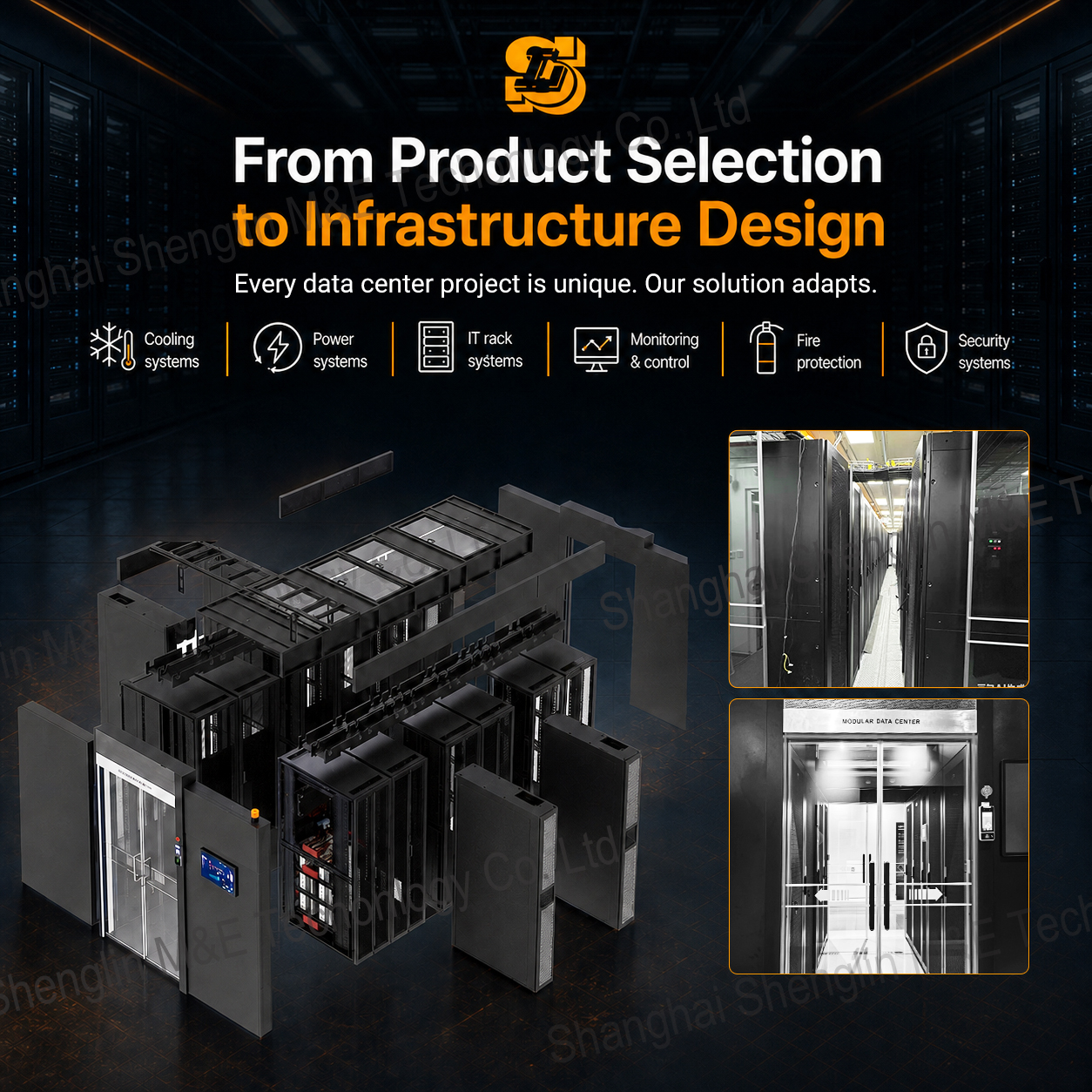
One of the main reasons modular data centers are gaining popularity is their shorter deployment time. Many components, including IT racks, cooling equipment, power distribution systems, and monitoring devices, can be integrated into prefabricated modules before delivery. This reduces the amount of installation work required on-site and helps simplify project coordination.
For organizations that need to expand computing capacity quickly, modular solutions can provide a practical alternative to conventional construction.
2. Flexible and Scalable Infrastructure
Computing requirements can change as businesses grow, digital services expand, and AI workloads increase. Modular data centers allow capacity to be added in stages rather than requiring the entire facility to be built at once. Additional modules can be introduced according to actual demand, helping operators manage investments and plan future expansion more effectively.
This flexibility is particularly valuable for growing enterprises, telecommunications providers, cloud service operators, and edge computing applications.
3. Integrated Cooling and Power Systems
Cooling and power supply are essential to stable data center operation. Modular data centers can integrate cooling systems, power distribution, UPS equipment, IT racks, and monitoring and control systems into a coordinated infrastructure solution.
Depending on the project requirements, cooling configurations may include precision air conditioning, chilled water systems, or other suitable cooling technologies. A properly designed system helps maintain appropriate operating conditions for IT equipment while supporting reliable performance and efficient energy use.
4. Quality Control and Space Efficiency
Prefabricated modules can be assembled and tested in a controlled manufacturing environment before being transported to the project site. This approach helps improve installation consistency, simplify quality inspections, and reduce potential on-site coordination issues.
Modular designs can also make effective use of limited space. Containerized and compact configurations are suitable for applications where a dedicated building is unavailable or where equipment needs to be deployed close to users and industrial operations.
5. Suitable for Diverse Applications
Modular data centers are used in a wide range of environments, including enterprise IT facilities, telecommunications networks, edge computing sites, industrial projects, and AI infrastructure. Their configurations can be tailored to different requirements for IT capacity, rack layout, cooling, power redundancy, and environmental protection.
At SHENGLIN, we provide modular and prefabricated data center solutions designed around specific project requirements. By coordinating equipment selection, cooling configuration, power distribution, and space planning, we help customers develop infrastructure that aligns with their operational needs and future expansion plans.
As digital workloads continue to evolve, modular data centers offer a practical way to build adaptable infrastructure. With appropriate system design and careful project planning, businesses can deploy computing resources more efficiently while maintaining the flexibility to respond to changing demands.


- 01 Feb,2024Dry Cooler D4-8x910 In Stock Is On Sale! Discount!
- 06 Sep,2023Pad Adiabatic Dry Cooler Trial Operation Before Shipment
- 06 Sep,2023828kW Adiabatic Cooling System Dry Cooler Loading
- 17 Aug,2022Flat Type Dry Cooler Finished For Canada Client
- 06 Sep,20231061kW dry cooler loading for USA client
- 31 Mar,2021Peru client Install Shenglin Adiabatic Dry Cooler At Site