
How to Choose the Right Commercial Air Handling Unit
Date:2026-10-10Choosing the right air handling unit (AHU) is an important step in designing an efficient HVAC system for a commercial building. Offices, shopping centers, hotels, hospitals, and educational facilities have different requirements for indoor air quality, temperature control, ventilation, and energy consumption. A properly selected AHU helps maintain a comfortable indoor environment while supporting reliable system operation and manageable maintenance costs.
For building owners, HVAC contractors, and engineering consultants, several key factors should be considered before selecting an air handling unit.
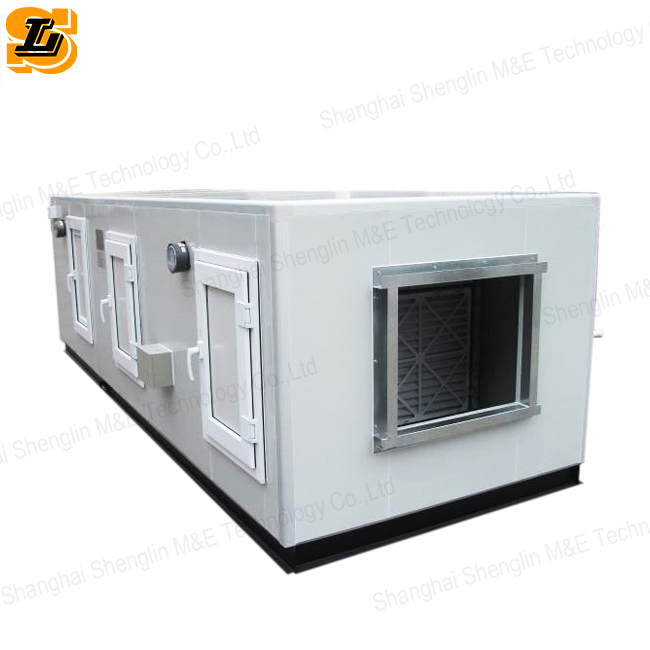
1. Determine the Required Cooling Capacity and Airflow
The first step is to evaluate the building's cooling and heating loads and required airflow. These requirements depend on the building's floor area, occupancy, lighting, equipment, outdoor climate, and operating schedule.
An undersized AHU may struggle to maintain the desired indoor temperature, while an oversized unit may increase initial investment and operating costs. Professional load calculations and airflow assessments help determine the appropriate unit capacity for each application.
2. Select the Appropriate Cooling System
Air handling units can use different cooling methods according to the building's HVAC configuration. A chilled water AHU uses chilled water from a central chiller plant to cool the supply air. A direct expansion (DX) AHU uses a refrigerant-based cooling system.
The choice depends on the existing HVAC infrastructure, building size, installation conditions, and project requirements. Coordinating the AHU with the overall HVAC system helps improve operating efficiency and simplifies system integration.
3. Consider Air Filtration and Indoor Air Quality
Indoor air quality is particularly important in commercial buildings with high occupancy or specific cleanliness requirements. The required filtration level should be determined according to the building's use, outdoor air conditions, and applicable standards.
Offices and retail spaces may require general air filtration, while healthcare facilities, laboratories, and cleanrooms may need more advanced filtration arrangements. Depending on the application, an AHU can incorporate different functional sections for air mixing, filtration, cooling, heating, humidification, and other air treatment processes.
4. Evaluate Energy Efficiency and Noise Levels
Fans and heat exchange coils are important components affecting AHU performance. High-efficiency heat exchange coils help provide the required cooling capacity, while properly selected fans support the required airflow with reasonable energy consumption.
Noise and vibration should also be considered, especially in offices, hotels, and other noise-sensitive environments. A well-designed air handling unit should balance airflow performance, energy efficiency, and acoustic comfort.
5. Check the Unit Structure, Installation Space, and Maintenance Requirements
Before placing an order, confirm the available installation space, access for transportation, connection arrangements, and clearance for routine maintenance. The unit's casing structure, insulation, and air tightness also influence its durability and operating performance.
A modular casing design can simplify transportation, installation, and component replacement. SHENGLIN air handling units feature modular construction, a no-cold-bridge design, and dynamically balanced double-inlet centrifugal fans. These features support insulation performance, reduce air leakage, and contribute to stable, low-noise operation. The design also considers convenient access for maintenance and cleaning.
6. Choose a Supplier That Can Meet Project Requirements
The right AHU supplier should understand the building's operating conditions and provide equipment suited to the project's technical requirements. Important considerations include product configuration, component selection, technical documentation, installation guidance, and after-sales support.
SHENGLIN offers air handling unit options for a range of applications, including commercial buildings, offices, hospitals, and industrial facilities. Depending on project requirements, the unit configuration can be selected to accommodate different airflow, cooling, filtration, and installation needs.
Conclusion
Selecting the right air handling unit requires more than comparing cooling capacity or purchase price. Building load, airflow, cooling method, filtration, energy efficiency, noise control, installation conditions, and maintenance access should all be evaluated together. By matching the AHU configuration to the building's actual requirements, project teams can establish a reliable HVAC solution that supports indoor comfort and long-term operational efficiency.
SHENGLIN provides air handling unit solutions for commercial and industrial applications. Contact our team to discuss your project requirements and identify a suitable AHU configuration.


- 01 Feb,2024Dry Cooler D4-8x910 In Stock Is On Sale! Discount!
- 06 Sep,2023Pad Adiabatic Dry Cooler Trial Operation Before Shipment
- 06 Sep,2023828kW Adiabatic Cooling System Dry Cooler Loading
- 17 Aug,2022Flat Type Dry Cooler Finished For Canada Client
- 06 Sep,20231061kW dry cooler loading for USA client
- 31 Mar,2021Peru client Install Shenglin Adiabatic Dry Cooler At Site